
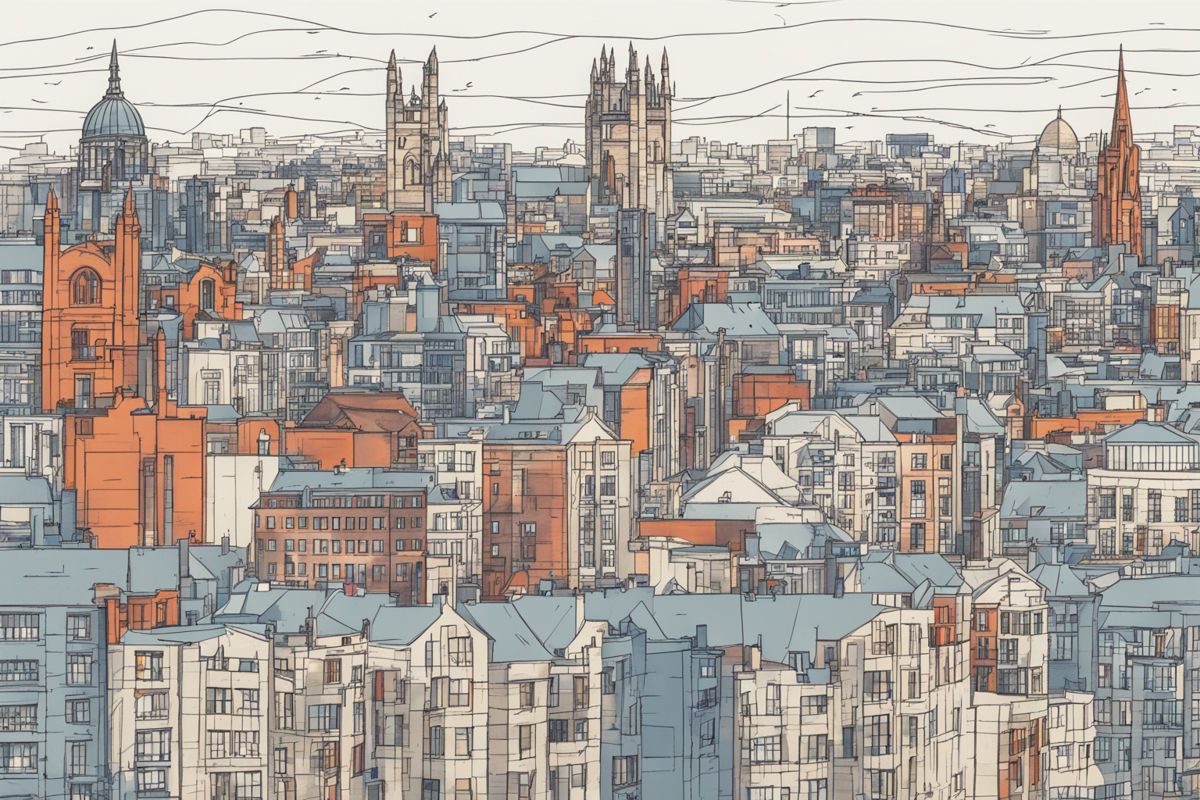
Leeds’ stunning skyline is a testament to visionary architects like Cuthbert Brodrick, who designed the iconic Leeds Town Hall, and Pascal Joseph Stienlet, known for the cinematic grandeur of The Majestic. With contributions from modern talents like Simon Clarke and Alex Whitbread, the city beautifully blends its rich historical roots with contemporary innovation, creating a vibrant tapestry of architectural legacy.
Who are the architects that shaped the city of Leeds?
Leeds’ architectural heritage is attributed to influential architects like Cuthbert Brodrick, Pascal Joseph Stienlet, the Leeming brothers, Emanuel Vincent Harris, and Sir George Gilbert Scott. Modern architects such as Simon Clarke and Alex Whitbread also contributed. They crafted landmarks like Leeds Town Hall, The Majestic, Kirkgate Market entrance, Leeds Civic Hall, Leeds General Infirmary, Granary Wharf, and Broadcasting Place, blending historical and contemporary designs to shape Leeds’ skyline.
The Architects Who Shaped Leeds’ Landscape
Leeds, a city steeped in history and brimming with architectural marvels, owes much of its character to the visionaries who designed its skyline. These architects, whose creativity and ingenuity have stood the test of time, have indelibly imprinted their stories into the city’s very fabric. In reflecting on these luminaries, one can’t help but appreciate the rich tapestry of design and influence that makes up Leeds.
Cuthbert Brodrick: A Legacy Cast in Stone
One cannot discuss the architectural heritage of Leeds without mentioning Cuthbert Brodrick, born in Hull in 1822. Brodrick’s apprenticeship with Henry Lockwood unveiled a prodigious talent that was later honed through his European travels. Admiring the classical works of Paris and Rome, he infused Leeds with a similar grandeur.
His first major commission, Leeds Town Hall, was a turning point in his career and the city’s image. The structure, completed in 1858, was inaugurated by Queen Victoria – an event witnessed by an astounding 600,000 spectators. Brodrick’s contributions didn’t stop there; Leeds Corn Exchange and Leeds City Museum also bear his signature. His designs were underpinned by a commitment to authenticity, a trait that endeared him to a city that values genuine craftsmanship.
Pascal Joseph Stienlet: The Cinematic Architect
Moving on to a different era and a different style, Pascal Joseph Stienlet’s influence on Leeds is synonymous with cinematic grandeur. Born in 1879, Stienlet’s partnership with Henry Gibson laid the foundation for his illustrious career in cinema architecture. Their collaboration paved the way for over 200 cinema designs.
In Leeds, Stienlet’s crowning achievement is undoubtedly The Majestic. It boasts a Beaux-Arts façade and a Grecian frieze paralleling the Parthenon – a testament to his ambitious and cultured approach to design. While the building has faced challenges over the years, its revival and preservation remain a priority for the city, honoring Stienlet’s architectural legacy.
Joseph and John Leeming: Crafting the Entryway to Leeds
The Leeming brothers, natives of Halifax, carved their niche with a win in the competition to redesign the entrance of Kirkgate Market following Leeds’ ascension to city status in 1893. This win catapulted Joseph and John into the spotlight and cemented their reputation as master architects.
The result was an entrance graced with Flemish and Art Nouveau details, a four-story testament to the city’s ambition and the brothers’ skill. They balanced extravagant design with utilitarian function, creating a space that has served Leeds faithfully for over a century.
Emanuel Vincent Harris: From South to North
Emanuel Vincent Harris, born in 1876, brought his Plymouth-born sensibilities to Leeds with the design of the Civic Hall. Harris’ approach was meticulous and bold, securing a Royal Academy Gold Medal and a storied career that led him to reshape cities across the UK.
Leeds Civic Hall, completed in 1933, is a standout piece of Harris’ portfolio. King George V and Queen Mary graced its opening, a momentous occasion in the city’s history. Harris’ design not only provided a functional space but also a beacon of civic pride, one that has remained central to Leeds’ identity.
Sir George Gilbert Scott: The Gothic Revivalist
Sir George Gilbert Scott’s impact on English architecture, with over 800 projects to his name, is incalculable. His work on Leeds General Infirmary, advised by Florence Nightingale, showcased his ability to meld aesthetic beauty with practical design.
This facility, with its Victorian gothic architecture, has not only served the health needs of the city’s populace but has also stood as a landmark of architectural prowess. Scott’s legacy in Leeds is a reminder of the city’s capacity for nurturing and appreciating grand designs.
The Modern Masters: Clarke, Whitbread, and Others
The story of Leeds’ architecture, however, is not only told through the buildings of yesteryear. Contemporary architects like Simon Clarke and Alex Whitbread continue to shape the city’s skyline. Clarke’s Granary Wharf and Whitbread’s Broadcasting Place reflect the city’s evolving aesthetic and economic landscape.
These modern structures, with their award-winning designs and transformative impact on the city’s South Bank, embody the innovative spirit that defines Leeds. They seem to say that, while the city honors its past, it is not bound by it and looks ever forward.
The Unsung Heroes: Corson, Gardner, and Bonomi
Among the illustrious names are those who, like George Corson, Michael Gardner, and Joseph Bonomi the Younger, have made quieter yet significant contributions. Corson’s Central Library and Grand Theatre, Gardner’s Bridgewater Place, and Bonomi’s Temple Works each offer a unique narrative thread in the city’s architectural story.
These structures, from libraries to skyscrapers, serve as daily reminders of how each generation has left its indelible mark. They are physical embodiments of history and aspiration, standing tall as monuments to the architects’ visions.
Preserving the Architectural Heritage
As Leeds looks to the future, the importance of preserving this architectural heritage becomes ever more apparent. Each building acts as a milestone in the city’s journey. They are not just structures of brick and mortar but storied edifices that hold the collective memories and aspirations of Leeds.
In celebrating the architects who made Leeds what it is today, we acknowledge our debt to their vision and our role as stewards of their legacy. For those who walk the streets of Leeds, take a moment to look up and appreciate the city not just for what it is, but for the people who envisioned its skyline – a skyline that tells the story of Leeds, one building at a time.
- Leeds’ architectural landscape is shaped by notable architects like Cuthbert Brodrick and Pascal Joseph Stienlet, who designed iconic structures such as Leeds Town Hall and The Majestic.
- Influential architects including Emanuel Vincent Harris and Sir George Gilbert Scott have contributed significantly to the city’s architectural heritage, with landmarks like Leeds Civic Hall and Leeds General Infirmary.
- The Leeming brothers gained recognition for their redesign of the Kirkgate Market entrance, showcasing their masterful blend of Flemish and Art Nouveau styles.
- Contemporary architects like Simon Clarke and Alex Whitbread continue to enhance Leeds’ skyline with modern designs such as Granary Wharf and Broadcasting Place.
- The preservation of Leeds’ architectural heritage is crucial for honoring the vision of its architects and maintaining the city’s historical narrative.