
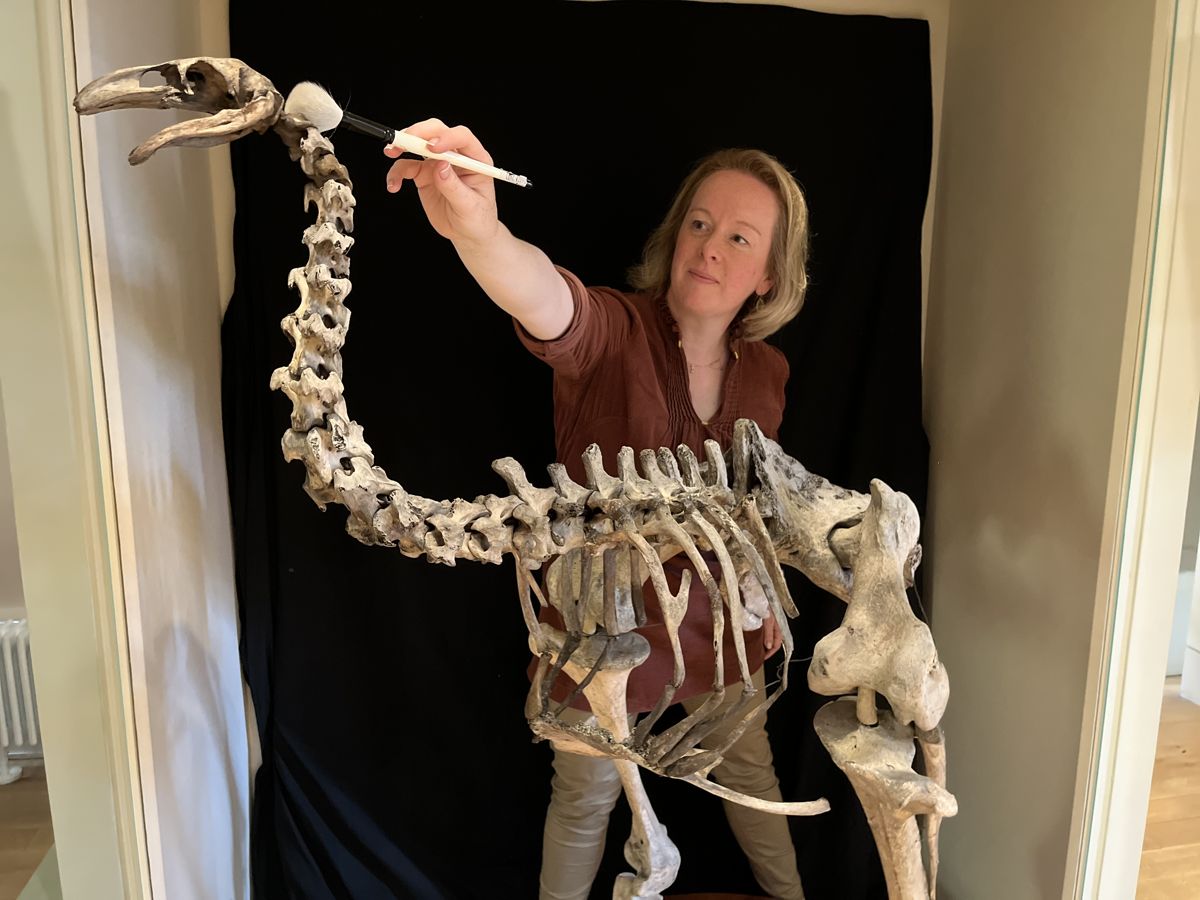
At Leeds City Museum, the towering skeleton of a giant moa, an extinct flightless bird from New Zealand, serves as a powerful testament to the devastating impact of human-driven extinction, having vanished around 570 years ago. Expert curators like Clare Brown meticulously preserve this rare, near-complete specimen through careful cleaning and conservation, ensuring its legacy inspires future generations and critical environmental awareness.
What is the significance of the giant moa skeleton at Leeds City Museum and how is it preserved?
The giant moa skeleton at Leeds City Museum is a rare, near-complete example of an extinct New Zealand bird, serving as a reminder of human-driven extinction. Expert curators regularly conserve the skeleton, ensuring its preservation for education, research, and inspiring conservation efforts.
Rediscovering a Lost Giant: The Moa’s Journey to Leeds
Deep within the halls of Leeds City Museum, visitors can marvel at the towering skeleton of a bird that last roamed the Earth over half a millennium ago – the heavy-footed moa. This extraordinary relic, notable for its near-complete preservation, traces its roots to a species that once dominated the forests and grasslands of New Zealand. The moa, distinguished by its imposing stature – standing nearly six feet tall and weighing over 300 pounds – was among the largest flightless birds that ever existed.
The story of the moa skeleton in Leeds began in 1868, when Henry Denny, then curator of the Leeds Philosophical and Literary Society, secured the rare specimen for the city. At the time, it was known to be the only example outside the British Museum in London, making it a scientific treasure in the UK’s collection of natural history. Over the decades, the skeleton survived both the passage of time and the perils of World War II, sustaining damage when the museum’s original home, Philosophical Hall, was bombed in 1941.
Decades later, in 2011, museum curators made a remarkable rediscovery: the bones of the moa, long thought lost or forgotten, were found and subsequently restored. Today, they are prominently displayed in the Collectors Cabinet, offering the public an opportunity to engage with a tangible piece of prehistoric life – a life that was extinguished around 570 years ago due to hunting and deforestation.
The Meticulous Art of Conservation
Recently, the moa skeleton underwent a comprehensive condition check, part of the ongoing commitment by museum curators to preserve this rare artifact for future generations. Each bone, some delicate and others robust, was carefully inspected and cleaned to ensure the specimen remains in optimal condition. Experts checked for any signs of dust accumulation, wear, or deterioration, a process that requires both patience and specialized knowledge.
Clare Brown, curator of natural sciences at Leeds Museums and Galleries, emphasized the importance of such efforts: “The moa is a truly historic specimen which really captures the imagination and brings a completely different world inhabited by extinct and bizarre giants to life.” This meticulous cleaning serves not only to maintain the skeleton’s appearance but also to protect it from the long-term effects of environmental factors such as humidity, pollutants, and vibration.
Conservation work on the moa skeleton is part of a broader initiative to safeguard the museum’s extensive collections, which include other extinct species like the dodo and the giant Irish elk. The conservation team employs a combination of traditional cleaning techniques and modern scientific methods, ensuring that each step is tailored to the unique requirements of fossilized bones and historic artifacts. In doing so, they preserve crucial evidence of evolution and extinction for scientific study and public education.
The Moa’s Legacy: Lessons from Extinction
The extinction of the moa stands as a stark reminder of the fragility of ecosystems in the face of human activity. Once thriving across New Zealand, all species of moa were driven to extinction within a short period after human arrival, primarily as a result of overhunting and habitat destruction. Clare Brown notes, “It’s also a tangible example of the potentially devastating impact which changing habitats, climates and hunting can have on fragile species and the ecosystems they live in. This was a species which walked the earth for thousands of years, but which completely disappeared within a relatively short time of interacting with humans.”
This historic event is not unique to the moa. Leeds City Museum’s display of extinct animals, which also includes the dodo – a symbol of human-driven extinction – offers visitors a striking lesson in biodiversity loss. These specimens help contextualize the scale and speed with which human actions can alter the natural world, and serve as a warning for present and future conservation challenges.
The museum encourages dialogue about conservation and environmental stewardship. By displaying the moa and its fellow extinct creatures, the institution provides a visual and educational resource that highlights the interconnectedness of human and natural histories. The presence of these specimens underscores the urgency of protecting endangered species and habitats in the present day.
The Role of Museums in Inspiring Conservation
Museums like Leeds City Museum play a pivotal role in both preserving the past and inspiring action for the future. Councillor Salma Arif, executive member for adult social care, active lifestyles and culture at Leeds City Council, remarked, “Having such an impressive collection of objects on display which capture the astonishing diversity of the animal kingdom both past and present can really help visitors understand our role in the natural world.”
To fulfill this mission, museums implement a range of initiatives:
– Preservation and Restoration: Systematic care of artifacts ensures that specimens like the moa skeleton are available for generations to come.
– Education and Outreach: Interactive exhibits and educational programs deepen public understanding of natural history and conservation.
– Research Support: Museums provide resources for scientific study, offering insights into past extinctions and informing current conservation strategies.
The stewardship of rare specimens extends beyond the walls of the museum. Through their collections and public programs, museums foster a sense of wonder and responsibility, urging visitors to reflect on the impact of human activity on the environment. By shining a spotlight on the stories of the moa and its contemporaries, they encourage a collective commitment to safeguarding the natural world.
For more information about visiting or supporting the museum’s work, see Leeds City Museum | Leeds Museums and Galleries.
- The giant moa, an extinct flightless bird from New Zealand, is prominently displayed as a rare, near-complete skeleton at Leeds City Museum.
- The moa, standing nearly six feet tall and weighing over 300 pounds, was one of the largest flightless birds ever.
- The skeleton, acquired by Henry Denny in 1868, survived damage during a 1941 bombing and was rediscovered and restored in 2011.
- Expert curators, like Clare Brown, meticulously clean and conserve the moa skeleton to preserve it and protect it from environmental factors.
- The moa’s extinction, around 570 years ago due to human hunting and deforestation, serves as a powerful reminder of human impact on ecosystems.