
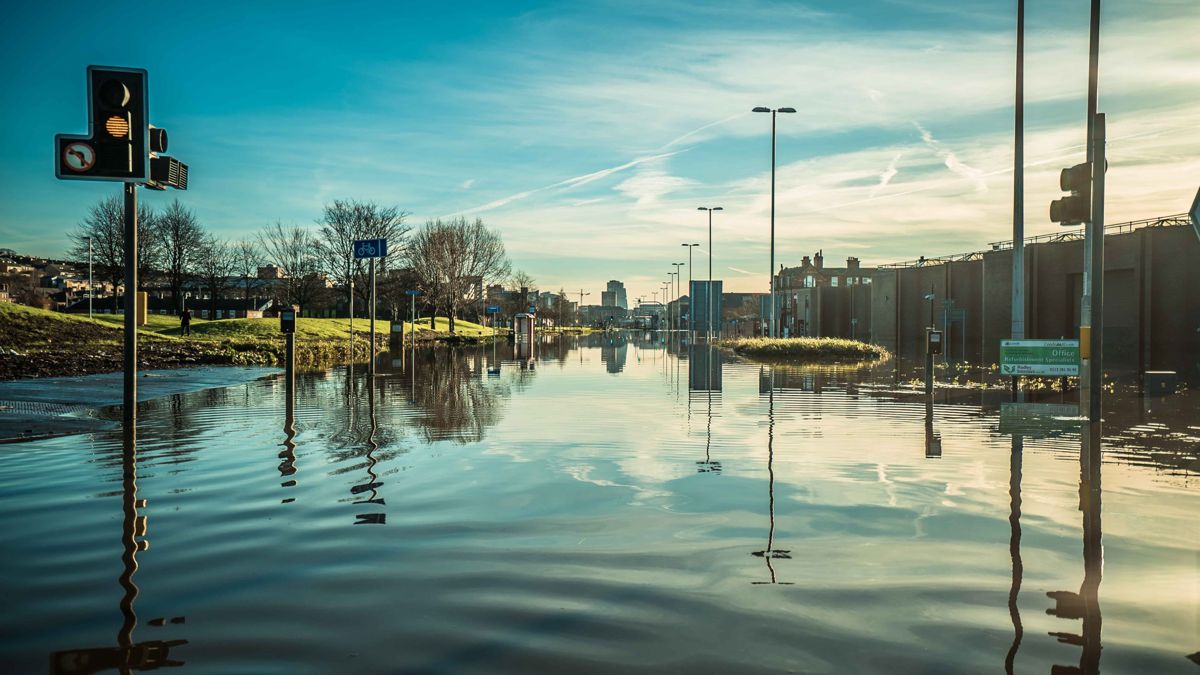
Ten years after the devastating Boxing Day floods in 2015, Leeds has dramatically bolstered its defenses with a £200 million flood alleviation scheme, featuring innovative movable weirs and natural solutions like the Aire Resilience Company. These efforts now protect 4,000 homes and prepare the city for future climate challenges, showcasing remarkable resilience and foresight.
How has Leeds improved its flood resilience since the Boxing Day floods of 2015?
Since the 2015 Boxing Day floods, Leeds has implemented the £200 million Leeds Flood Alleviation Scheme featuring movable weirs, embankments, pumping stations, flood storage areas, and nature-based solutions like the Aire Resilience Company. These measures protect 4,000 homes and prepare the city for future climate-driven flood risks.
The Devastating Impact of Storm Eva and the Boxing Day Floods
A decade has passed since Storm Eva struck Leeds on Boxing Day 2015, causing catastrophic flooding across the city and its waterways. For many, the festive season became unrecognizable as the River Aire reached a record level of 5.2 meters following prolonged heavy rainfall, far surpassing its typical flow of 15 tonnes per second with an astonishing 360 tonnes per second surging through the city. The River Aire, River Wharfe, and Aire and Calder Navigation were all overwhelmed, leading to a flooding disaster described as a 1-in-200-year event.
The fallout was immediate and harrowing. Fourteen Leeds wards were inundated, with more than 2,600 homes and 650 businesses suffering damage. Critical infrastructure – power substations, communications systems, and key road and rail networks – was compromised. The financial costs were enormous: £36.8 million in damages within Leeds alone and over £500 million across the wider region. However, the less tangible impact – the toll on physical and mental health – remained incalculable, affecting families, residents, and business owners throughout the city.
Community response was both swift and empathetic. As the floodwaters began to recede, the city saw an outpouring of support, with over 1,000 volunteers mobilizing for the extensive clean-up effort. This reflected the resilience and solidarity of affected communities, especially in hard-hit areas like Kirkstall, where images of devastated businesses and submerged streets became emblematic of the storm’s severity.
Engineering Leeds’ Defenses: The Flood Alleviation Scheme
In the aftermath of 2015, Leeds embarked on an unprecedented journey to guard against future disasters. The centerpiece of this endeavor is the Leeds Flood Alleviation Scheme (LFAS), now recognized among the largest flood defense projects in the United Kingdom. Working alongside the Environment Agency and the West Yorkshire Combined Authority, Leeds City Council spearheaded an investment of £200 million, designed to provide a 1-in-200-year standard of protection for 4,000 homes, 1,000 businesses, and 33,000 jobs citywide.
The first phase, completed in 2017, focused on the city center, stretching from Leeds Station to Woodlesford. This stage involved merging the River Aire and canal at Knostrop Cut, erecting innovative embankments and walls that maintained access to the waterfront, and deploying two pioneering movable weirs – at Knostrop and Crown Point. These weirs, the first of their kind in the UK, can be independently lowered to increase the river’s capacity during flood threats. Since its completion, Phase 1 has been activated nine times, a testament to the frequency of extreme weather events amid a changing climate (source).
Phase 2, completed in 2024, extended protection from Leeds Station to Apperley Bridge in Bradford. New elements included miles of linear flood defenses, additional pumping stations, and a massive flood storage area near Calverley. This storage zone, managed via two large flood gates, boasts a 200-meter-long, 6.2-meter-high embankment, capable of holding over 720 Olympic-sized swimming pools of water. The construction of this facility allows controlled, gradual release of floodwaters, shielding downstream communities from sudden inundation. The scheme is also underpinned by a dedicated Leeds City Council team of flood experts and engineers, ensuring year-round, rapid response readiness.
Facing a New Climate Reality: Challenges and Innovations
Leeds’ flood defense initiatives were not implemented in isolation from broader environmental trends. The years following Storm Eva have underscored the accelerating impact of climate change: wetter winters, more frequent and intense rainfall, and a discernible rise in severe weather events across the UK. The winter of 2024, for instance, set new records for rainfall and flood incidents nationally, with Yorkshire highlighted as a region increasingly vulnerable to such threats (see 2024 climate report).
The LFAS is designed with these realities in mind, offering flood protection levels that include allowances for climate change projections through 2069. Engineering solutions are complemented by robust monitoring – hydrological modeling demonstrates that just one full-scale activation of the system can offset its entire construction carbon footprint, supporting Leeds’ net zero ambitions. Notably, the environmental excellence of LFAS has been formally recognized with a BREEAM ‘Excellent’ rating, particularly in sustainability, resilience, and pollution control categories.
The wider program encompasses smaller, localized projects in areas like Garforth and Otley, and has been coupled with updates to city policies: all new developments must now incorporate updated climate allowances in flood risk assessments. Together, these efforts aim not only to reduce direct damage from flooding but also to foster biodiversity, with improved water quality and habitats evidenced by the return of species such as otters and salmon to the River Aire.
Natural Solutions and Community Partnerships: Aire Resilience Company
Beyond hard engineering, Leeds has embraced nature-based solutions to further increase resilience. The Aire Resilience Company (ARC), launched in 2025 as a Community Interest Company (CIC), marks a pioneering step in catchment-scale natural flood management. Conceived in collaboration with the Leeds City Council, Environment Agency, Yorkshire Water, The Rivers Trust, and Aire Rivers Trust, this innovative entity aligns public and private investment to deliver and maintain natural interventions upstream of the city (learn more).
ARC builds on earlier projects already transforming the Upper Aire Catchment, an area spanning nearly 700 square kilometers. Achievements as of 2025 include the planting of over 750,000 trees, soil restoration on more than 1,200 hectares, and the creation of new wetlands and woody dams. These interventions are grounded in evidence from hydrological models – it is projected that natural flood management in the Upper Aire can cut peak flows by up to 5%, significantly easing pressure on hard flood defenses further downstream.
Key activities for ARC through 2025 involve working with local farmers and landowners to install and maintain woodlands, wetlands, soil improvements, and protective hedgerows. The business model provides long-term maintenance backed by adaptive monitoring, ensuring years – if not decades – of sustained impact. Beyond flood resilience, these initiatives promote biodiversity, improve water quality, and foster job creation in catchment management and nature-related enterprises. ARC is also engaging Leeds businesses to channel investment into the catchment, encouraging a whole-society effort in building climate preparedness.
For more on the innovative and collaborative approach of ARC and its partners, visit their official website.
- Leeds has implemented a £200 million flood alleviation scheme since the 2015 Boxing Day floods.
- The scheme includes innovative movable weirs, embankments, pumping stations, and natural solutions like the Aire Resilience Company.
- These measures now protect 4,000 homes and 1,000 businesses, and secure 33,000 jobs.
- Phase 1 of the scheme, completed in 2017, involved movable weirs at Knostrop and Crown Point to increase river capacity.
- Phase 2, completed in 2024, extended protection to Apperley Bridge and includes a flood storage area capable of holding over 720 Olympic-sized swimming pools of water.