
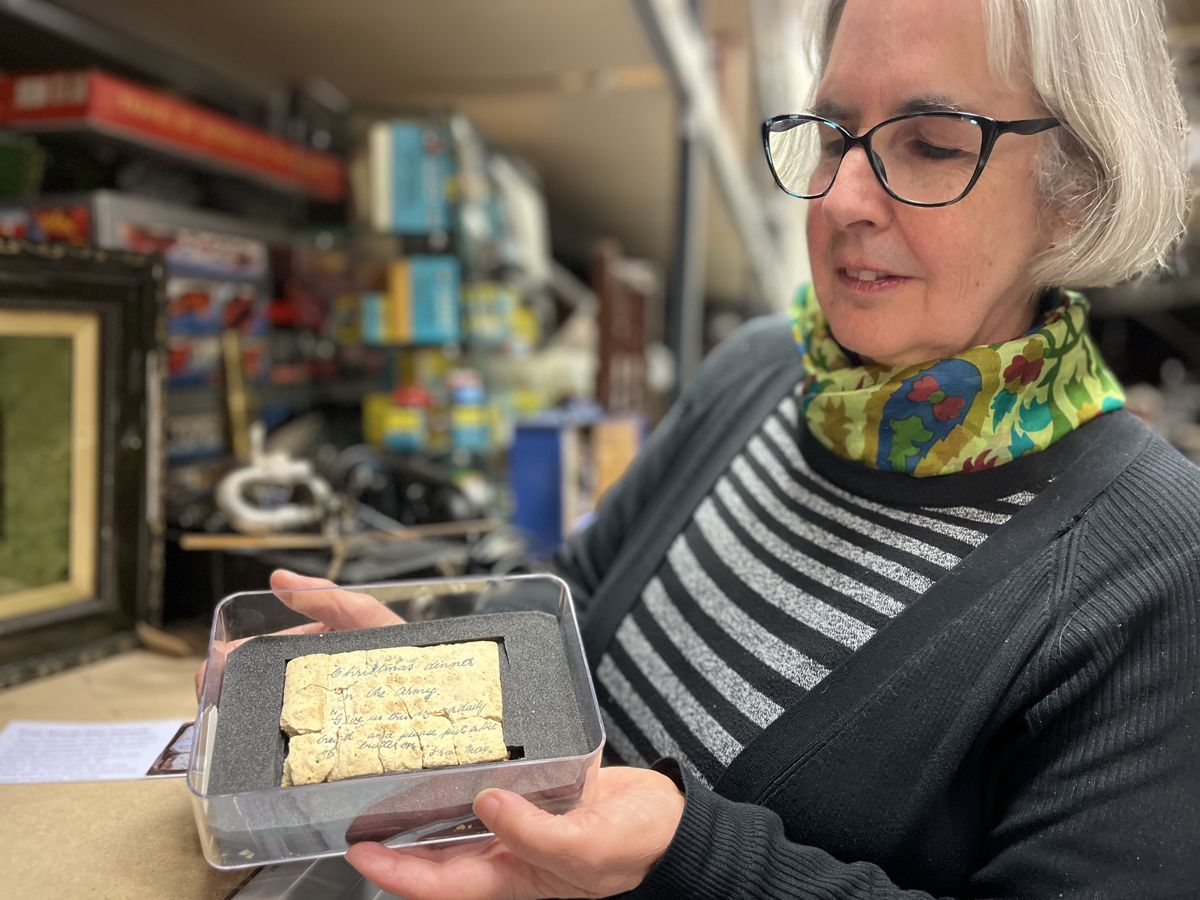
During World War I, brave British soldiers on the Western Front crafted heartfelt messages and art onto their hardtack biscuits, sending these unique tokens home to their loved ones, like Private William Maxwell’s poignant last message to his wife in Meanwood, Leeds. These ‘biscuit messages’ preserved at the Leeds Discovery Centre, transformed a symbol of harsh rations into a vivid connection across the trenches, bridging vast distances with humor and emotion during the festive Christmas season.
What were soldiers’ biscuit messages during World War I, and why were they important at Christmas?
During World War I, British soldiers sent home Christmas messages inscribed on trench biscuits, using them as humorous or heartfelt stationery. These biscuit messages served as both criticism of harsh rations and creative morale-boosters, connecting troops with loved ones during the emotional, festive season.
Christmas Messages from the Front Lines
During the First World War, British soldiers endured harsh conditions on the Western Front, far from the warmth and comfort of home during the festive season. One particularly poignant tradition emerged in 1914: troops repurposed emergency rations – commonly known as trench biscuits or hardtack – as humorous and heartfelt stationery. These biscuits, once intended to sustain men in dire circumstances, evolved into tokens carrying inscribed greetings, jokes, and miniature artworks sent back to loved ones in the United Kingdom.
A notable example preserved at the Leeds Discovery Centre reveals the last Christmas message of Private William Maxwell of the 9th Queen’s Royal Lancers. Wrapped in its original paper addressed to Mrs. Maxwell of Meanwood, the message reads: “Christmas dinner in the Army. ‘Give us this day our daily bread’ and please put a bit of butter on. From Max.” The biscuit was likely his final communication before his death in May 1915, marking a bittersweet farewell amid the turmoil of war. His brother Arthur Maxwell, also a serviceman, was killed just months earlier, underlining the profound sacrifices made by countless families.
Soldiers’ use of biscuits reflected both their criticism of military rations and their creativity. While some adorned their biscuits with painted images – such as a battleship and the hopeful phrase “Wishing you a Merry Christmas and a bright new year” – others kept the messages plain and sardonic. These preserved objects offer modern viewers a glimpse into the emotional landscape of those far from home, especially during a time that traditionally centers on family and togetherness.
Trench Biscuits: From Ration to Morale Booster
The infamous trench biscuits, or Army No. 4 biscuits, were designed for longevity and resilience, not culinary pleasure. Manufactured by Huntley & Palmers in response to an August 1914 order from the British War Office, these emergency rations consisted primarily of whole-wheat flour, water, and salt. Each square biscuit measured around 10 centimeters and was virtually indestructible – a trait that earned them widespread derision among troops. Hardened by design to withstand months in storage, many found them nearly impossible to eat without soaking them in tea or water, or grinding them into pastes for stews and soups.
Nutrition was only part of the equation for these biscuits. In addition to joining bully beef and jam as components of “iron rations,” their extreme durability led soldiers to adopt them as canvases for art or written correspondence. Examples from the era include Henry Charles Barefield’s satirical “Our new rations. Thought you would like one. Gott Straffe G.” and a Northampton Museum artifact labeled: “Army biscuit served out to the British troops with rations.” These improvisations addressed both the monotony and hardship of trench warfare while fostering shared humor and resilience.
The practice of transforming rations into personal mementos extended beyond biscuits, as soldiers found creative outlets in the bleakest conditions. Picture frames, souvenirs, and postcards crafted from ration supplies became treasured family keepsakes, preserving both the physical and emotional realities of war. For a deeper exploration of these artifacts, Public History UVA’s summary on army biscuits offers insightful examples and soldier testimonies.
Leeds Museums: Sharing Memories Across Generations
Today, these remnants from the trenches form a significant part of social history collections cared for by Leeds Museums and Galleries. The Leeds Discovery Centre, which safeguards these biscuit messages, welcomes visitors on pre-booked tours where trained curators provide context and access to a vast repository of over 1.2 million objects. Visits run on Wednesdays and Thursdays by prior arrangement, and the Discovery Centre operates a ‘Give What You Can’ admission model, encouraging donations while ensuring broad accessibility regardless of means. Tour booking details and background can be found on the official website.
Festive artifacts from different eras further highlight the theme of Christmas as a time for shared memory and giving. One such item is a late 1960s Cutie doll, given to a child from a homeless family as part of a local charity appeal, still carrying the handwritten label: “To Denise Xmas 1969, from mummy and dad.” Alongside biscuit messages, other objects on seasonal display include a set of Mickey Mouse Christmas lights and glass baubles produced by Morley’s Briteglass Ltd, all tied to stories of family, celebration, and local craftsmanship in Leeds.
Councillor Salma Arif of Leeds City Council notes: “Each of these objects has meant something unique and special to the people who once owned them, but they all encapsulate the timeless tradition of Christmas bringing people together.” This commitment to preserving and sharing collective memories reinforces the museums’ role as centers of community connection, especially during the festive season.
Present-Day Festive Experiences in Leeds Museums
Leeds City Museum and the Discovery Centre offer additional seasonal programs that foster community spirit and provide visitors of all ages with hands-on experiences. While the current 2025 calendar does not feature war-themed exhibits, it includes several family-focused Christmas events that celebrate festive traditions. The “12 Days of Elfmas Trail,” running from early December to early January, invites children and families to explore the museum in search of hidden elves in whimsical scenes, earning stickers and discovering seasonal surprises along the way (details here).
In December, special events such as “The Snowman and The Snowdog in Concert” and “Candlelight Concerts” featuring holiday classics provide opportunities for musical enjoyment and collective nostalgia. Additional programs at nearby Leeds museums, such as “A Very Pom Pom Christmas” at Leeds Industrial Museum and Santa Grotto visits at Abbey House Museum, further expand the options for families seeking festive fun with a historical twist. Although not all these events are directly tied to wartime history, they underscore the enduring role of museums in celebrating tradition and fostering connections across generations.
For those interested in exploring the themes of Christmas through the lens of social history, the Discovery Centre offers both guided and behind-the-scenes tours of its extensive collections. These tours not only showcase unique objects from different eras but also provide valuable insight into the lived experiences of Leeds residents past and present, from the trenches of the First World War to mid-century homelessness and postwar celebration. Volunteers or visitors can support these efforts through the Discovery Centre’s donation model or by participating in community-centered programs throughout the season.
- During World War I, British soldiers inscribed messages and art onto hardtack biscuits and sent them home to loved ones.
- These ‘biscuit messages’ transformed a symbol of harsh rations into a vivid connection between soldiers and their families, especially during Christmas.
- Private William Maxwell’s poignant last Christmas message to his wife in Leeds, preserved at the Leeds Discovery Centre, is a notable example.
- The hardtack biscuits were originally designed for longevity and resilience, not culinary pleasure, leading soldiers to repurpose them creatively.
- Leeds Museums and Galleries, including the Leeds Discovery Centre, preserve these artifacts and offer tours to share these historical memories and foster community connections.