
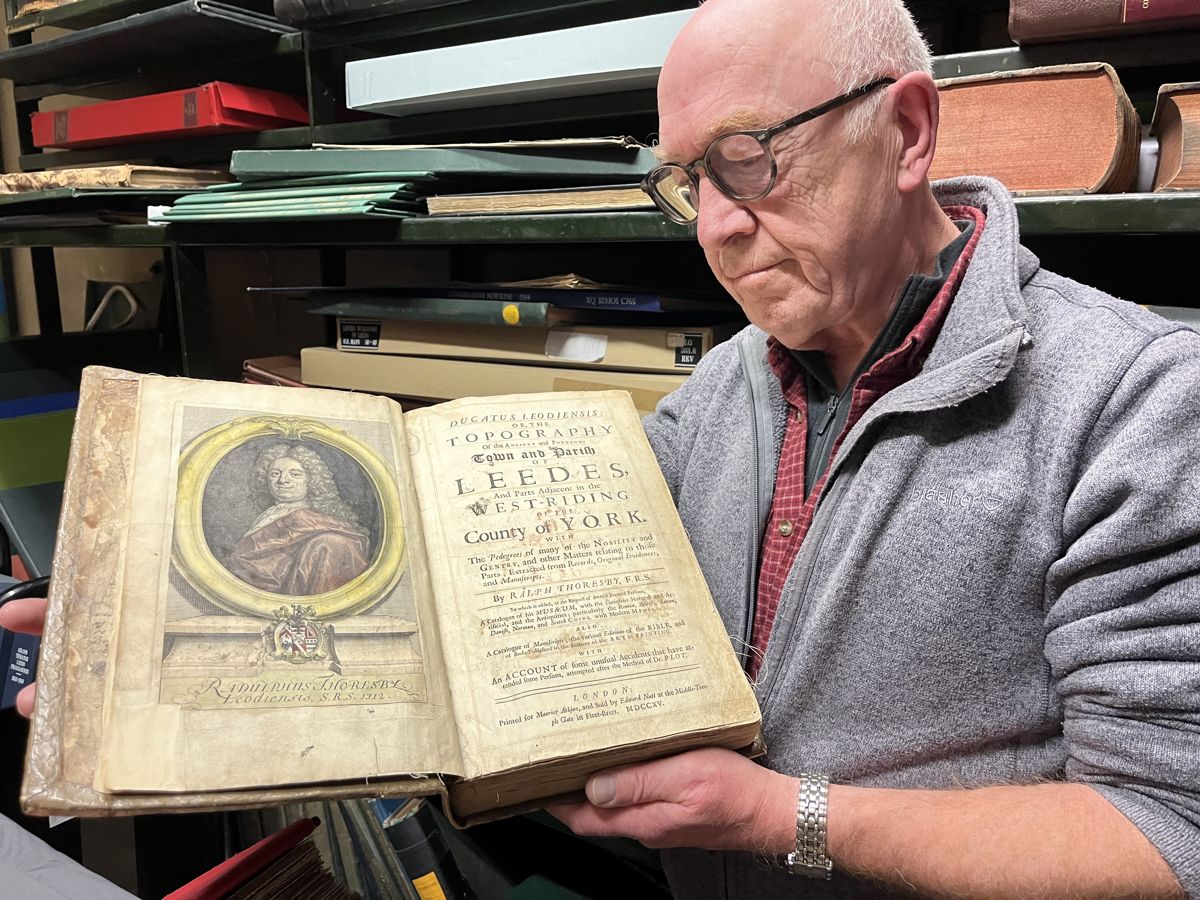
Hidden within the special collections of Leeds Central Library is a captivating tale of King Charles I’s alleged 1647 escape plot from Red Hall, detailed in handwritten notes within Thoresby’s Ducatus Leodiensis. Though debated, this dramatic story, involving a disguise and a loyal servant, wonderfully highlights the library’s crucial role in preserving Leeds’ rich local history and intriguing narratives for all to explore.
What hidden historical events from Leeds’ past have been uncovered by the special collections at Leeds Central Library?
Leeds Central Library’s special collections revealed a dramatic 1647 escape plot involving King Charles I, documented in margin notes of Thoresby’s Ducatus Leodiensis. While debated, this tale spotlights the library’s role in preserving Leeds’ local histories and rare stories for public discovery.
Rediscovering a Royal Plot in the Margins of Leeds’ Past
Leeds Central Library’s special collections have unveiled a dramatic episode from the city’s history: an audacious escape plan for King Charles I in 1647. This tale comes to light through handwritten annotations found in a rare edition of Ralph Thoresby’s Ducatus Leodiensis, a landmark work chronicling Leeds’ topography and notable families. Unique among historical documents, these margin notes – added by antiquarian Thomas Wilson – allege a secret plan to aid the monarch’s flight from captivity at Red Hall. As recorded, the ploy involved disguising Charles in women’s clothing so that he might slip away, led by Mrs Crosby, a servant of a local wool merchant. Civil strife, shadowy plots, and the vivid personalities of the English Civil War swirl through this narrative, which Wilson regards as the first written account of the event.
According to the notations, Mrs Crosby herself provided the intended disguise and would have guided the king into the night beyond Leeds. Charles, however, honorably declined the offer. The story continues with a personal touch: the king reportedly presented Mrs Crosby with his garter, instructing her to give it to his son if he ever ascended the throne. Years later, Charles II rewarded her husband with the prestigious office of High Bailiff of Yorkshire. This gesture, preserved in the library’s rare volume, ties local lore to the broader sweep of British royal history.
Yet, the authenticity of the episode remains a source of debate. While the library’s marginal notes make for a captivating story, no verified historical record corroborates an escape attempt by Charles in Leeds. Primary sources describe his imprisonment in the city as a brief stopover in early 1647, with no documented bid for freedom until later at Hampton Court and Carisbrooke Castle. Despite these uncertainties, the account enriches the legend of Leeds in the national imagination, embodying the enduring allure of hidden histories.
Timeless Chronicles: The Creation and Influence of the Ducatus Leodiensis
Leeds Central Library’s rare copy of Ralph Thoresby’s Ducatus Leodiensis is more than a local curiosity – it’s a cornerstone of historical scholarship. Published in 1715, the full title of this ambitious volume is “The Topography of the Antient and Populous Town and Parish of Leedes and Parts Adjacent in the West Riding of the County of York.” As the city’s first formal historian, Thoresby devoted years to collecting heraldic emblems, family trees, and beautifully detailed illustrations of landmarks such as Kirkstall Abbey. His dedication ensured that future generations would have access to the full depth and complexity of Leeds’ story.
Thoresby’s volume isn’t merely a collection of facts. It incorporates family genealogies, antique coats of arms, and vivid depictions of places that continue to hold cultural meaning for citizens today. By mingling documentary research with artistry, Thoresby’s work set new standards for the chronicling of English urban life. Notably, the Ducatus Leodiensis exists in only a few special editions, each offering unique features – like the annotated version that preserves the tale of Charles I and Mrs Crosby.
The impact of Thoresby’s scholarship has been far-reaching. His efforts inspired later historians, such as William Boyne, whose own multivolume history of Leeds in the nineteenth century drew heavily on the precedent set by the Ducatus Leodiensis. Today, Thoresby’s influence is visible in the ongoing work of professional and amateur historians alike. As Antony Ramm, special collections librarian at Leeds Central Library, observes: “Thoresby’s exhaustive research and irrepressible dedication… may well have prevented many of these fascinating events and stories being lost in time.”
The Special Collections: Display, Access, and Living Legacy
Leeds Central Library’s special collections, including the remarkable Ducatus Leodiensis, are available for public viewing in the local and family history section. The annotated edition featuring the Charles I anecdote was on display until the New Year, offering visitors a rare glimpse into both the material culture and the narrative imagination of earlier times. Such exhibitions supplement the library’s broader commitment to public engagement, research, and education.
The calendar of exhibitions continues to grow. Notable scheduled events include the “Journeys” exhibition (2024), which brought together items from libraries around Leeds to explore themes of migration and movement, and “Unearthed: The Power of Gardening” (10 September – 29 October 2025), a free exhibition focusing on transformative stories drawn from the collections. In early 2026, the family-centered “Story Explorers in Leeds” event will invite visitors to interactively explore tales from the library’s archives. More details and exhibition schedules can be viewed on the official Leeds Libraries website and through partner programs like the British Library’s Story Explorers.
Public access is a core value for the library. The special collections, though precious and sometimes fragile, are made available to researchers, students, artists, and history enthusiasts on request. This approach ensures that the library remains a living institution, supporting the ongoing discovery of stories that, like the tale of King Charles I’s near escape, continue to fire the imagination.
Digital Preservation: Safeguarding and Sharing Local History in the Modern Era
The preservation and accessibility of historical materials are evolving rapidly, shaped by investments in digital technology and collaborative initiatives across the UK. Recent trends highlight the essential role of digitization in protecting rare volumes, manuscripts, and local records from the dangers of fire, decay, and loss. For example, Historic England’s Archive digitizes images, maps, and 3D reconstructions of heritage sites, ensuring that even locations at high risk of destruction are conserved virtually. Local library and community archives use scanners and smartphones to create digital surrogates for water-damaged papers and irreplaceable photographs – tactics that have proved vital during unexpected incidents.
Accessibility, too, is expanding. Digital platforms now provide researchers and the public with the tools to search, view, and interact with local history from anywhere in the world. The National Archives’ “Our Digital Century” program, running through 2026, offers guidance, skills training, and drop-in sessions for archives large and small. This enables even under-resourced collections – like those in remote or rural communities – to participate in the national conversation about heritage. Metadata enrichment and digital storytelling enhance discoverability, while outreach to schools and civic groups fosters generational interest and inclusivity.
These advances place institutions like Leeds Central Library within a UK-wide network dedicated to the democratization of historical knowledge. Programs such as the Digital Preservation Coalition’s award schemes and open-source resources help sustain momentum. Challenges remain, especially for smaller archives, but the direction is clear: the investment in digitization and public engagement promises to protect and share the unique stories of places like Leeds well into the future. For more information on how libraries preserve history in the digital era, readers can explore Digital Preservation Coalition resources and read about national strategies at The National Archives.
- Leeds Central Library’s special collections contain handwritten notes detailing an alleged 1647 escape plot by King Charles I from Red Hall.
- This story is found in margin notes within a rare edition of Ralph Thoresby’s Ducatus Leodiensis, added by antiquarian Thomas Wilson.
- The alleged escape plan involved King Charles I disguising himself in women’s clothing and being guided by a servant, Mrs Crosby, although he reportedly declined the offer.
- Ralph Thoresby’s Ducatus Leodiensis, published in 1715, is a foundational work chronicling Leeds’ history and topography, setting new standards for urban historical scholarship.
- Leeds Central Library offers public access to its special collections, including the Ducatus Leodiensis, and actively engages in digital preservation to safeguard and share local history.