
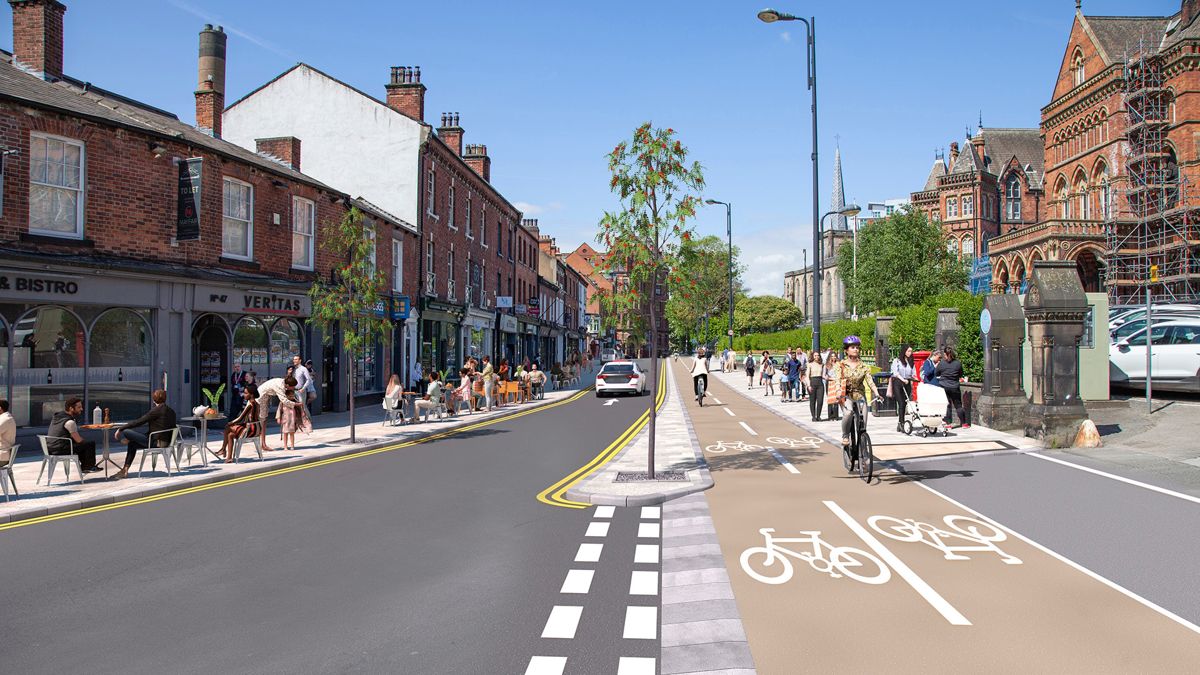
Leeds is transforming its urban core with the ambitious Leeds City Links scheme, an £8.29 million project set to revolutionize pedestrian and cyclist mobility by early 2027. This initiative, focusing on central Leeds’s northern and southern corridors, will introduce wider pavements, segregated cycle tracks, and enhanced crossings, creating a safer and greener city for everyone.
What is the Leeds City Links scheme and how does it improve urban mobility?
The Leeds City Links scheme is an £8.29 million project transforming central Leeds by creating wider pavements, new segregated cycle tracks, improved pedestrian crossings, and better public spaces. Aimed at increasing walking and cycling, it reduces car use and supports sustainability goals.
Ambitious Upgrades for Central Connectivity
The Leeds City Links scheme marks a milestone in efforts to improve urban mobility in Leeds, with a comprehensive package of changes focused on making the city centre more accessible and safer for those walking or cycling. This flagship project, backed by a total investment exceeding £8.29 million as of the July 2024 business case, is funded predominantly by the City Region Sustainable Transport Settlements (CRSTS) fund in partnership with the West Yorkshire Combined Authority. Construction activity commenced on January 5, 2024, and is scheduled for completion by early 2027, with major components targeted for delivery by late 2025.
The project is structured around two key corridors – northern and southern – that link the northern and southern fringes of Leeds city centre to adjacent neighbourhoods. Among the most significant interventions along the northern corridor are the extensive widening of pavements on Great George Street, a new two-way segregated cycle track throughout, and major improvements at the intersection of Great George Street, Merrion Street, and Woodhouse Lane. The design envisages enhanced straight-across pedestrian crossings, improved greenery, and reallocation of existing street space to reduce on-street parking and boost outdoor commercial activity.
The southern corridor traverses Kirkgate, Wharf Street, High Court, The Calls, Call Lane, Swinegate, and Sovereign Street. Here, the focus is on providing a continuous, high-quality two-way cycle track, broader pavements for foot traffic, new pedestrian crossings, and a permanent reduction in traffic lanes to prioritize non-motorized movement. Consolidating these upgrades aims to create seamless, safe connections between key city destinations and to encourage modal shifts towards active travel modes.
Managing Traffic and Construction: Minimizing Disruption
As anticipated in such an extensive urban overhaul, temporary disruptions to vehicular traffic form an essential part of the construction phase. From January 2024, a one-way system was introduced between Oxford Place and Park Street along Great George Street, ensuring that westbound traffic access was maintained during works. Two-way traffic remained in operation up to Oxford Row, with traffic signals introduced to facilitate continued movement. These management measures are intended to allow the safe and efficient completion of works at complex junctions while retaining essential access to key city locations, such as Leeds General Infirmary and retail establishments.
Additionally, a scheduled road closure at the critical Great George Street/Merrion Street/Woodhouse Lane junction kicked off on 26 January 2024, lasting for 11 weeks. The council, after consultation with local businesses, intentionally delayed this closure until the post-holiday period to mitigate economic impact. Throughout the closure, pedestrian, local, and emergency access is ensured, as is clear signage for drivers seeking to reach parking facilities including Q Park The Light, CitiPark Merrion Centre & First Direct Arena, and Q Park St. John’s Centre. Tweaks such as rerouting right-turning traffic from Thoresby Place help minimize localised congestion and inconvenience for residents and businesses.
Project leaders stress the importance of transparent communication with stakeholders throughout construction. The council provides online updates and on-site signage to facilitate navigation, while ongoing engagement with the business community ensures operational continuity. Efforts to coordinate and mitigate traffic disruption reflect a broader strategy seen in related schemes, such as the Leeds city centre package, and support citywide goals of balancing mobility, safety, and economic vitality.
Sustainability, Funding, and the Vision for a Greener Leeds
The Leeds City Links initiative has a strong focus on sustainability, backed by robust funding and a framework of measurable benefits. The primary funding source, the CRSTS, has allocated over £7.78 million towards the scheme, with the remainder made up by Leeds City Council through Section 106 contributions – an arrangement that emphasizes collaboration between government and local stakeholders. Higher costs than initially forecast – reflecting revised designs, risk mitigation, and inflation – underscore both the ambition of the project and the importance of ensuring long-term value.
The environmental and social returns on this investment are significant. According to the project’s 2024 Business Case Summary, the scheme aims to deliver a 60% increase in cycle trips and a 10% uptick in walking trips along the affected routes by 2027. Specific improvements targeted for September 2025 include 1.7 km of new bi-directional cycleways across both corridors and the installation or enhancement of 11 pedestrian and cycling crossings. These upgrades are expected to reduce private car trips, encouraging shifts to public or active transport, and thus contributing to lower CO2 emissions citywide.
A core element of the scheme’s evaluation is the “Healthy Streets Score,” a holistic metric encompassing user perceptions of safety, ease of crossing, greenery, and rest areas. A 20% boost in this score by 2025 reflects aspirations to make Leeds a friendlier, healthier, and more inclusive city for all. These efforts support wider municipal ambitions, such as the Vision Zero 2040 strategy for road safety and the city’s net-zero carbon pledge by 2038, blending infrastructure delivery with proactive policies for sustainable growth.
Integrating with Broader Urban Initiatives
Leeds City Links does not exist in isolation; it is part of a comprehensive suite of revitalization efforts for the city centre. Upcoming and ongoing projects, such as the Woodhouse Lane Gateway scheduled for a 2026 start, enhancements to the A660 and Lawnswood roundabout, and the new Innovation Village at Leeds General Infirmary, dovetail with City Links to create a cohesive urban transport network. The integration of cycling and pedestrian improvements with major public spaces and employment centres aims to improve daily life for residents and boost the city’s economic competitiveness and resilience.
The scheme’s implementation utilizes proven delivery mechanisms, such as the city council’s Intermediate Works Contractor Framework (NEC4 Option C), which ensures design innovation, efficient risk-sharing, and flexibility in response to on-the-ground challenges. This approach is designed to keep construction on track for the November 2025 milestone for core outputs, while long-term monitoring plans will track the actual realization of projected benefits, including corridor capacity, reduced congestion, and improvement in urban amenity.
Ultimately, Leeds City Links positions the city as a national example of sustainable urban transformation. By prioritizing active transport, investing in public realm enhancements, and carefully managing the transitions necessary for construction, the scheme supports the vision of a thriving, liveable, and inclusive city. Additional information and regular updates can be found at the Leeds City Links construction site, and through the West Yorkshire Combined Authority’s project portal.
- The Leeds City Links scheme is an £8.29 million project aimed at transforming urban mobility in central Leeds for pedestrians and cyclists.
- The initiative will introduce wider pavements, segregated cycle tracks, and enhanced crossings across northern and southern corridors of the city centre.
- Construction for the project began in January 2024 and is scheduled for completion by early 2027, with major components targeted for late 2025.
- The scheme is predominantly funded by the City Region Sustainable Transport Settlements (CRSTS) fund in partnership with the West Yorkshire Combined Authority.
- The project aims to increase cycle trips by 60% and walking trips by 10% along affected routes by 2027, contributing to reduced car use and lower CO2 emissions.