
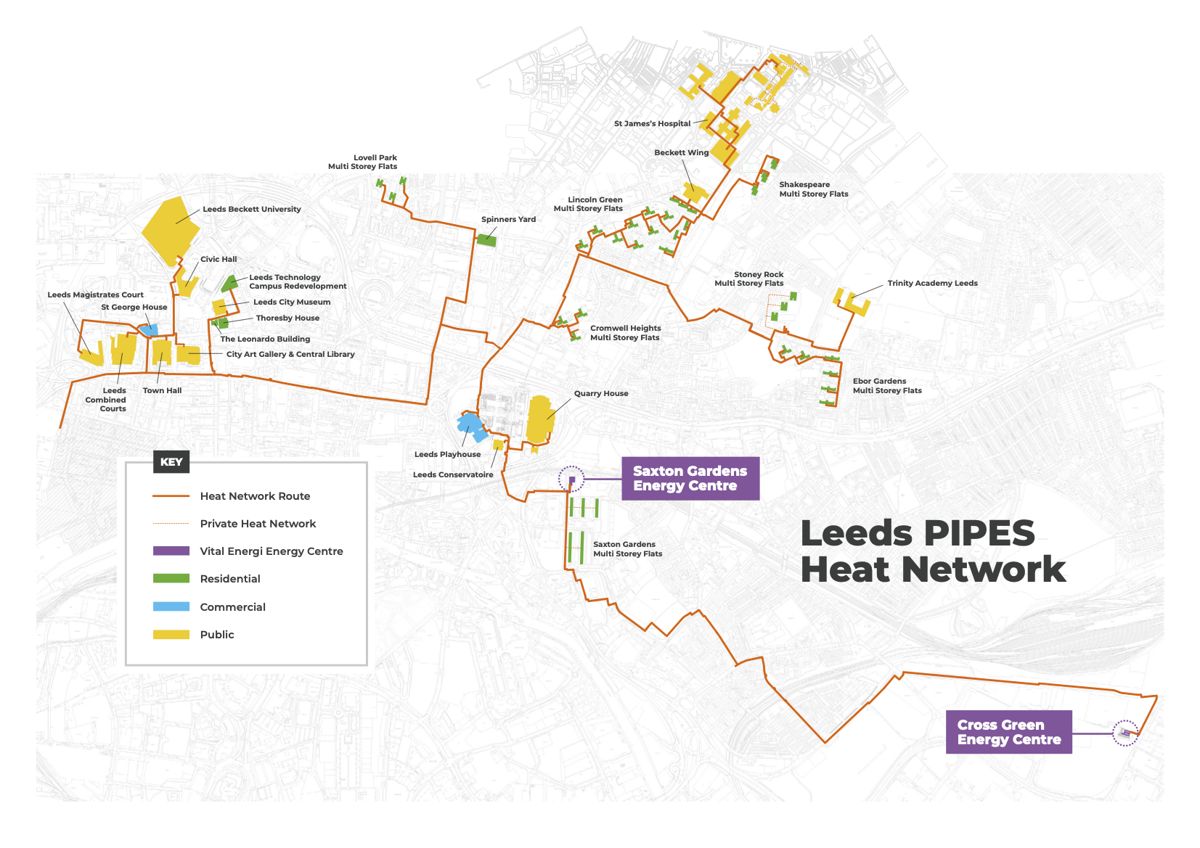
The Leeds PIPES expansion project is bringing sustainable heating to more properties, reducing carbon emissions by 279 tonnes annually and saving £490,000 in energy costs. This initiative is a significant step towards Leeds’ goal of achieving ‘net zero’ emissions and improving the living standards of its residents while addressing climate change and air quality issues.
What is the Leeds PIPES expansion project and its impact?
The Leeds PIPES expansion project equips additional properties with sustainable heating, reducing the city’s carbon footprint by an estimated 279 tonnes annually. It benefits hundreds of households by offering affordable, low-carbon heating solutions and saves £490,000 in energy costs this year, furthering Leeds’ goal of achieving ‘net zero’ emissions.
A Leap Forward for Housing and Environment
Leeds is taking significant steps to enhance the living standards of its residents while staunchly addressing climate change and air quality issues head-on. At the forefront of this initiative is the expansion of the Leeds PIPES district heating network, a project that’s setting a precedent in sustainable urban infrastructure. This expansion promises to equip three more tower blocks with affordable and eco-friendly heating solutions. In a groundbreaking move, 259 council properties across Lovell Park Heights, Grange, and Towers will transition to this low carbon system within a six-month timeframe, creating a ripple effect of positive change throughout the community.
The Leeds PIPES network is not just a boon for council properties but is also extending its benefits to private leaseholders in the Little London tower blocks. This inclusivity allows a broader demographic to take advantage of reduced heating costs and improved system reliability. The upgrade to Leeds PIPES signifies a marked improvement over existing heating systems, both financially and functionally. Additionally, Leeds Conservatoire has joined the initiative as the thirteenth non-residential entity to connect to the network, signaling a growing trend of organizational commitment to sustainability.
The environmental impact of these new connections is substantial. With an estimated reduction of 279 tonnes in the city’s annual carbon footprint, Leeds is forging ahead in its mission to achieve ‘net zero’ emissions. By harnessing heat from non-recyclable waste at the Recycling and Energy Recovery Facility (RERF), the Leeds PIPES project is a testament to innovative energy solutions that move away from traditional fossil fuels. The council and Vital Energi’s collaborative effort is a statement of intent, saving customers an impressive £490,000 in energy costs this year and laying a blueprint for other cities to follow.
Infrastructure and Carbon Footprint Reduction
In a move that melds economic savvy with environmental responsibility, the £62 million Leeds PIPES network is widening its reach. Recently, it has started supplying heat to Leonardo & Thoresby student accommodations and St James’s Hospital, thereby solidifying its role as a cornerstone of modern urban living. For Leeds City Council, the work is ongoing as discussions with potential customers continue, offering a chance for more buildings to tap into the existing infrastructure.
The scope of the network’s impact is measurable and significant. Last year alone, the system supplied a total of 22,029 megawatt-hours of heating, which contributed to a reduction of 3,975 tonnes in the city’s carbon emissions. The Leeds PIPES website serves as a platform for interested parties to express their intention to join the movement towards greener energy. This open invitation to connect enhances the network’s potential to reshape Leeds’ energy landscape.
A statement by Councillor Mohammed Rafique and Councillor Jessica Lennox encapsulates the council’s dedication to the project: “We are both delighted that hundreds more residents will soon be paying significantly less to heat their homes thanks to this latest expansion of the Leeds PIPES network. Too many families in our city struggle to pay their energy bills – in part because the UK’s homes are some of the least efficient and most reliant on costly fossil fuel gas in Europe. Whether it’s by connecting homes to affordable low carbon heating like Leeds PIPES, or investing in energy-saving measures like insulation, this council is committed to helping households by making our homes greener and fit for the future.”
Shared Vision for a Greener Leeds
Mike Cooke, Vital Energi’s Managing Director (North and Scotland), enthusiastically shared his thoughts on the recent developments: “Leeds PIPES continues to be the UK’s landmark heat network and we’re delighted to announce these new connections, which means more people will benefit from low-carbon, cheaper heat to businesses and residents, making a real difference in their day-to-day lives. We look forward to welcoming another 259 homes and Leeds Conservatoire to the fastest growing heat network and will work closely with the council to ensure they have the best possible customer experience.”
The Leeds PIPES project is not an isolated endeavor but a part of a broader vision that seeks a transformative approach to city living. Across the world, urban areas are becoming increasingly aware of the pressing need to adopt sustainable, low-carbon energy systems. Leeds is emerging as a leader in this global shift, demonstrating that large-scale environmental change is not only essential but achievable.
Notes for Editors:
For further context, the following table provides insights into the anticipated benefits of the recent connections to the Leeds PIPES network in terms of annual heat demand and carbon emissions reduction:
- Lovell Park Estate: With an estimated heat demand of 0.9 GWh, the estate is projected to see a drop in carbon emissions amounting to 94 tonnes of CO2e.
- Leeds Conservatoire: Expected to have a heat demand of 0.8 GWh, the conservatoire’s connection to the network will likely reduce carbon emissions by 185 tonnes of CO2e.
- Leonardo & Thoresby student accommodation: The student accommodations, with an estimated heat demand of 1.0 GWh, will contribute to a 43-tonne reduction in carbon emissions.
- St James’s University Hospital: As a significant consumer, the hospital’s heat demand is around 5.0 GWh, potentially reducing carbon emissions by a remarkable 1,138 tonnes.
By providing a tangible pathway towards energy efficiency and sustainability, Leeds is setting a standard for cities worldwide. The expansion of the Leeds PIPES network is more than an infrastructural development; it is a commitment to the future – a cleaner, greener, and more affordable way of life for all its residents.
- The Leeds PIPES expansion project is bringing sustainable heating to more properties, reducing carbon emissions by 279 tonnes annually and saving £490,000 in energy costs.
- The expansion of the Leeds PIPES district heating network will equip three tower blocks with affordable and eco-friendly heating solutions, benefiting council properties and private leaseholders.
- The Leeds PIPES project is reducing the city’s carbon footprint by harnessing heat from non-recyclable waste at the Recycling and Energy Recovery Facility (RERF).
- The Leeds PIPES network is widening its reach by supplying heat to Leonardo & Thoresby student accommodations and St James’s Hospital, contributing to a reduction of 3,975 tonnes in the city’s carbon emissions last year.
- The Leeds PIPES project is part of a shared vision for a greener Leeds and demonstrates that large-scale environmental change is achievable.